.png)
.png)
.png)
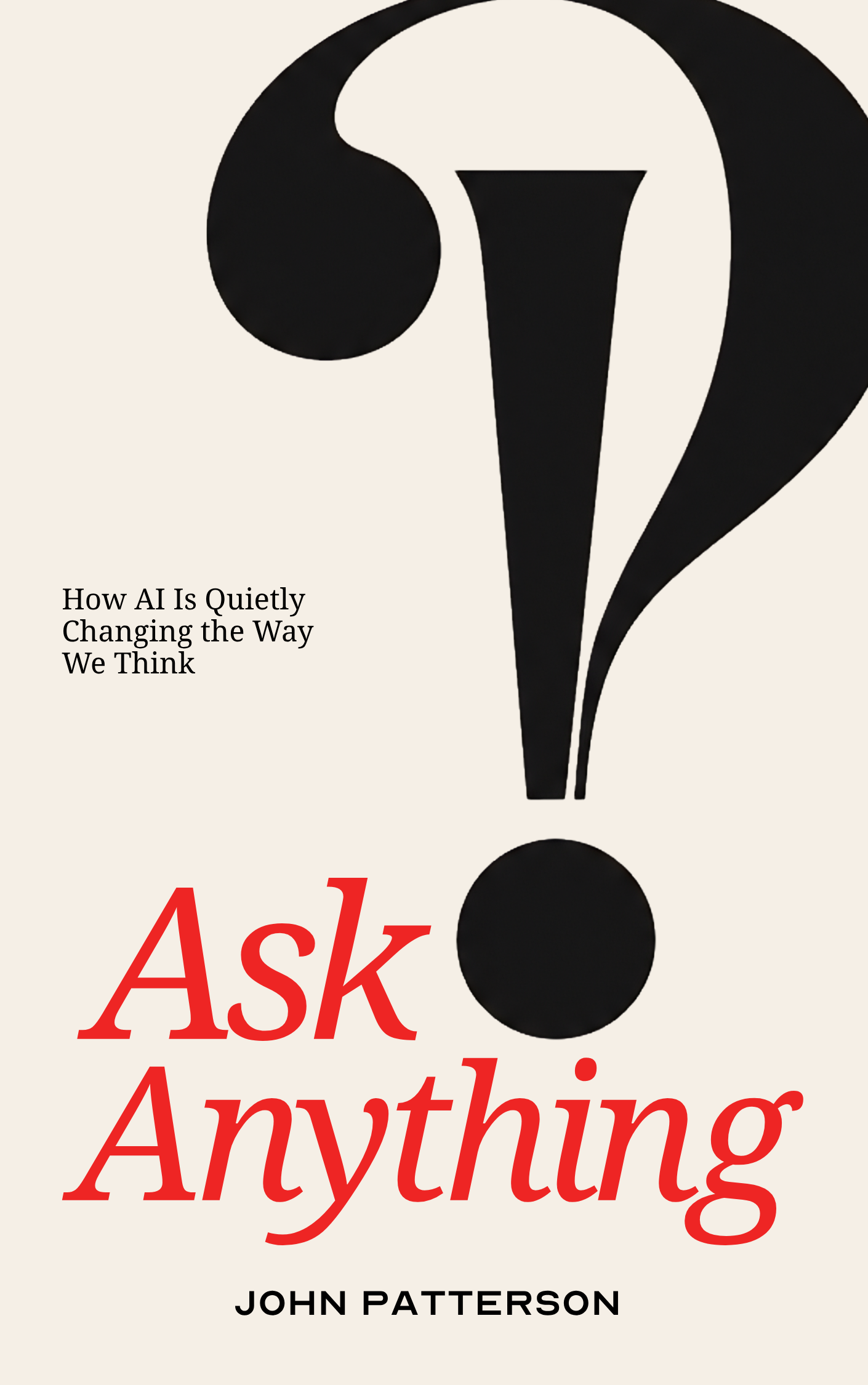
Ask Anything: AI, Emotion, and Influence
The TEDx talk that became a book. Drawing on seventeen years of marketing inside enterprise brands and a front-row seat to how AI is rewriting consumer trust, John Patterson reveals the mirror paradox, and what we can do about it before it shapes us in ways we can't see.
key topics:
1
The Mirror Paradox

AI is designed to mirror our emotions and preferences to keep us engaged. We, in turn, mirror its confident framing back to feel grounded and certain. Both sides are adapting to each other, and the result is a technology that genuinely helps and also reshapes how we think, feel, and decide in ways we haven't named yet. This talk gives audiences a name for something they've already been feeling.
2
From Search to Ask
For thirty years, the internet trained us to search. To compare ten blue links, weigh contradictory sources, and decide for ourselves who was right. That friction wasn't a bug. It was the cognitive workout that built our judgment. Now we ask, and a single confident paragraph arrives without authors, dates, or competing views. John walks audiences through what's been gained, what's been lost, and what changes when the way we know things changes.
3
The Machinery of Trust
Why does AI's first impression land so hard? Why do we stop verifying after a few good answers? Drawing from research on cognitive fluency, anchoring, and the optimization tradeoffs inside large language models, this section pulls back the curtain on what's actually happening when an AI response feels right, and why the feeling can be reliable in ways the information underneath isn't.
4
Calibrated Trust
The goal isn't to use less AI. The goal is to use it well. John introduces the calibrated trust framework, a way to vary your reliance on AI based on stakes, reversibility, and your own state of mind. It's the difference between a tool that supports your judgment and a tool that quietly replaces it.
5
Staying Human in the Loop
A practical toolkit for individuals, teams, and leaders. Friction practices that protect judgment without rejecting the tool. How to teach kids to use AI without outsourcing their muscle of doubt. And what AI companies, educators, and the rest of us owe each other as the technology gets faster than our ability to think alongside it.
